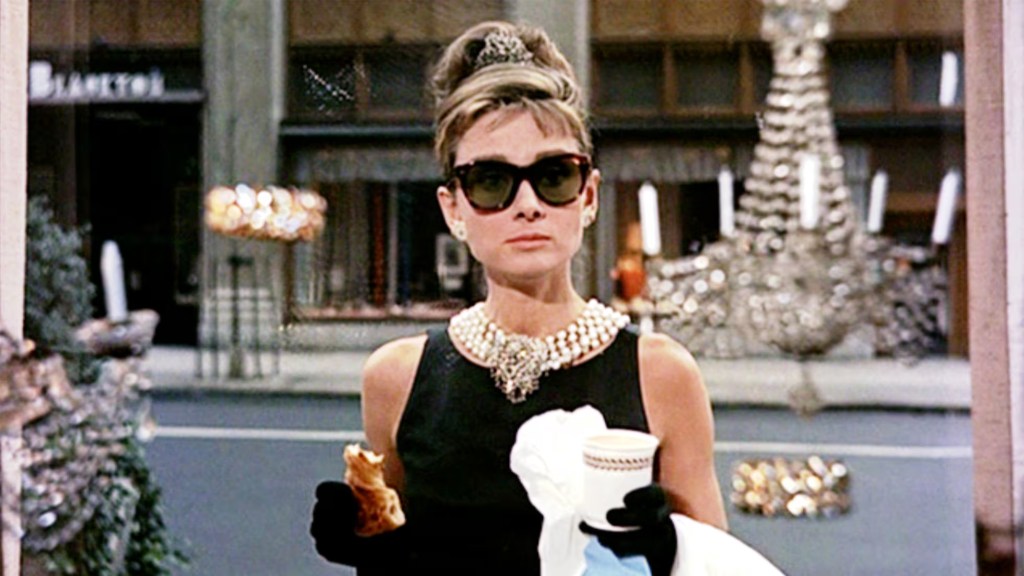
Style isn’t just some added flourish; it’s actually a fundamental component of composition.
Like the word “matters,” style can function as both a noun and a verb. We’ll be exploiting the full functionality of the term as we explore what constitutes style in academic writing.
A matter of convention
Much of what we refer to as style in composition isn’t individual or personal. It’s highly conventional and decidedly formal, like the tuxedos groomsmen wear to weddings.
The bibliographic method of the Modern Language Association (or the American Psychological Association, or the University of Chicago, or any other organization with a recognized citational method) is known as a style because it encodes a specific approach or technique for citation. These styles exists to be scrupulously followed, not creatively applied.
Major types of writing, categorized by function, are also referred to as styles. Most overviews identify expository, descriptive, narrative, and persuasive as the primary styles of writing.
You will always be expected to follow at least one of these conventional styles in academic writing.
Fashion trends
Some styles in writing are admitted fashion trends. Frequent capitalization of words throughout a sentence (not just at the start of a sentence) may appear odd to us, but it wasn’t the slightest bit unusual to 18th-century readers. When rules regarding what should and should not be capitalized were codified, excessive capitalization turned into a grammatical error.
The fact that conventional writing styles can fall in and out of fashion doesn’t make convention (or style itself) arbitrary or insignificant. Certain notations of error may be, in the poetic parlance of W.H. Auden, “only crimes/Punished by places and by times,” but we need a concept of “error” for clear and consistent written communication. Without any rules, laws, or guidelines, nothing would have a secure meaning.
Written communication in human societies is made possible by a system of instruction that necessarily relies upon gatekeepers and tastemakers. We may bristle at styles we consider ridiculous, but if there weren’t deeply serious persons, concerned with the minutiae of writing in their particular places and times, none of us would have the language-based form of communication we can use in lieu of speech.
Put in terms of The Devil Wears Prada (because who wouldn’t want to put things in terms of The Devil Wears Prada?), we’re all wearing cerulean blue, even if we don’t know it:
A personal preference
None of this is to say that there are no personal preferences in writing.
Some of these preferences are the legacy of what writers themselves were taught. People who honed their authorial skills when the use of personal pronouns was considered anathema to academic writing, for example, are frequently averse to including “I,” just as persons trained in technical and scientific writing are more apt to include headings in essays. Both personal pronouns and headings are perfectly acceptable in academic writing, yet every writing guide will caution against the over-usage of each. The “right amount” often comes down to the personal preference (and skillfulness) of the writer him/herself.
So let’s take a look at one of my admitted preferences.
Unless there’s a gun to my head, I won’t write: “In this paper I will. . .” There’s nothing grammatically wrong with that phrasing, I’ve never been taught not to use it, and I’ve read a number of published academic papers that rely on that very construction. I just don’t like it because I find it clunky and unhelpful.
Consider this: I could tell you that “in this handout I will present you with a photo of the famed Mexican actress, María Félix, wearing some of her trademark jewelry.” Or I could just insert this:

Now, tell me, what function did the forecasting sentence serve? Did it prepare you for María Félix’s fabulousness? No. Did it let you know that her iconic image would be used to illustrate a point about personal preference? Also no.
“But, but, but,” you might say: “didn’t you have to include that admittedly clunky construction to identify the picture?”
Did I? Any effort made to identify this legend of Mexican cinema could have come after I inserted the photo. (And there’s no need to include the rigamarole of “in this I will” to provide something as simple as a name!)
Like Coco Chanel, I consider simplicity a precondition of true elegance, and I’d rather someone simply and directly state a point, especially a main one that constitutes a thesis. (Because forewarning and implication are for Pythian priestesses, not polished prose stylists!)
A signature style
Can personal preferences lead to a signature style?
Absolutely.
Do you need a signature style?
Not necessarily.
Remember, you already have a voice, and this voice exists outside of writing. People who know you will know what “sounds like you.” This conversational persona, though, may not readily lend itself to certain writing exercises. And that’s okay.
A signature style is just that, a personalized form of expression that is recognizable across communication modes. You may find it very easy to express the “essential you” in texts or simple narratives, but it may be a bit of a struggle to “find your voice” in report writing or expository essays. Don’t worry if you don’t come right out of the compositional gate sounding just “like you”–some compositional practices rely on methods of articulation that may be new or somewhat alien to you, and some writing tasks require an impersonal style. (The routine assessment reports I compile for classes are very different than the chatty handouts I create for students–one is an impersonal recording of data, the other is a personalized breakdown of ideas or assignments.)
Your essays will be more “personal” than the assessment reports I am forced to write, but they should be more formal (i.e., less conversational) than this handout.
Crafting a professional persona
Here are some simple steps you can take to present a professional persona in academic writing:
- compose in complete sentences
- punctuate properly (this includes capitalizing the first words of sentences and learning when commas are necessary)
- avoid contractions
- use precise terms, even if you have to define those terms for general audiences
And never, ever forget that you will always have to carefully differentiate your own words and ideas from the source(s) you are using. If you are able to do all of that, you’ll have all the style you need to be dressed for success in academic writing.
 Helga's Hub