The Resource Manual for The Principles of Accreditation (most recently updated in 2018) is available online in pdf format. (If you click on the link, the manual will open in a new tab/browser window.)
The 206-page (pdf length, not content length) manual is admittedly long and covers a wide-range of areas and operation. It is also necessarily broad and flexible, as it accounts for a variety of institutions (and institutional types) in the region.

The manual is not an onerous read that is unduly specialized, technical, or complex. It outlines broad standards in simple language and provides both explanations of those standards and examples of what might provide documentation of compliance. Much of what frustrates us about SACSCOC “regulation” is our own institutional misreading or over-compliance.
The SACSCOC standards of most relevance to faculty:
All cut and pasted *directly* from the SACSCOC manual
Section 6: Faculty


Section 7: Institutional Planning and Effectiveness
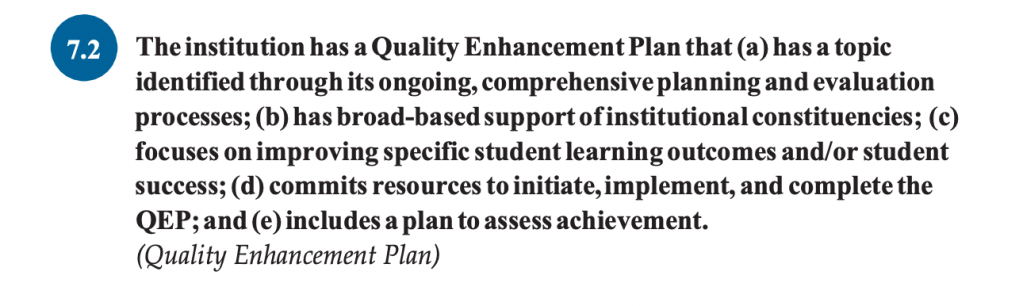
Section 8: Student Achievement
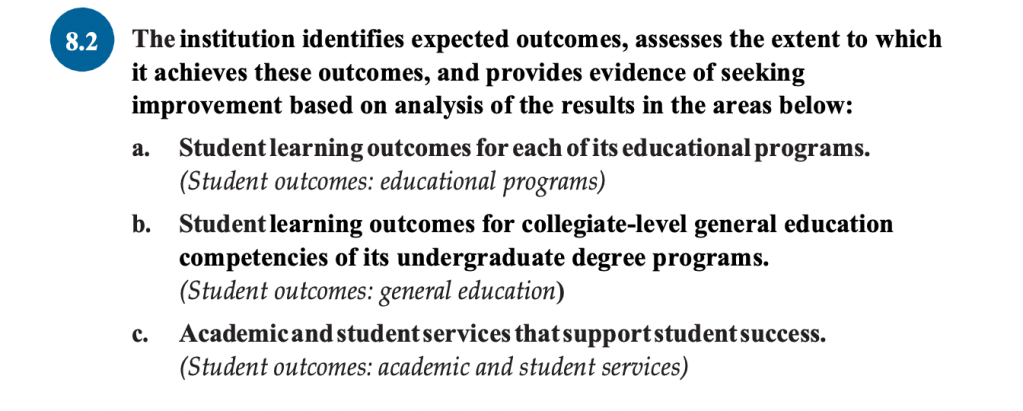
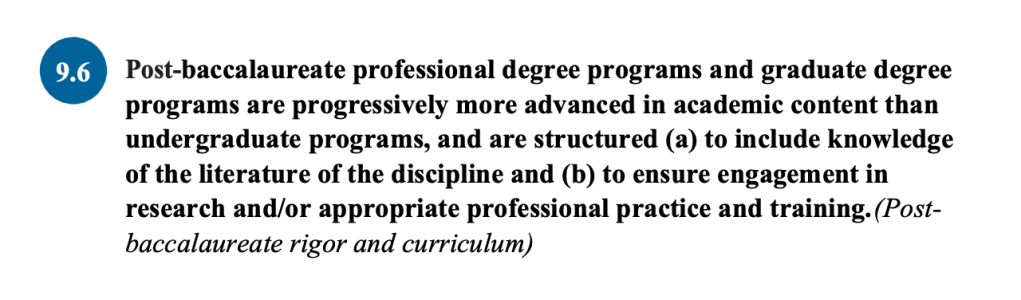
Section 9: Educational Program Structure and Content

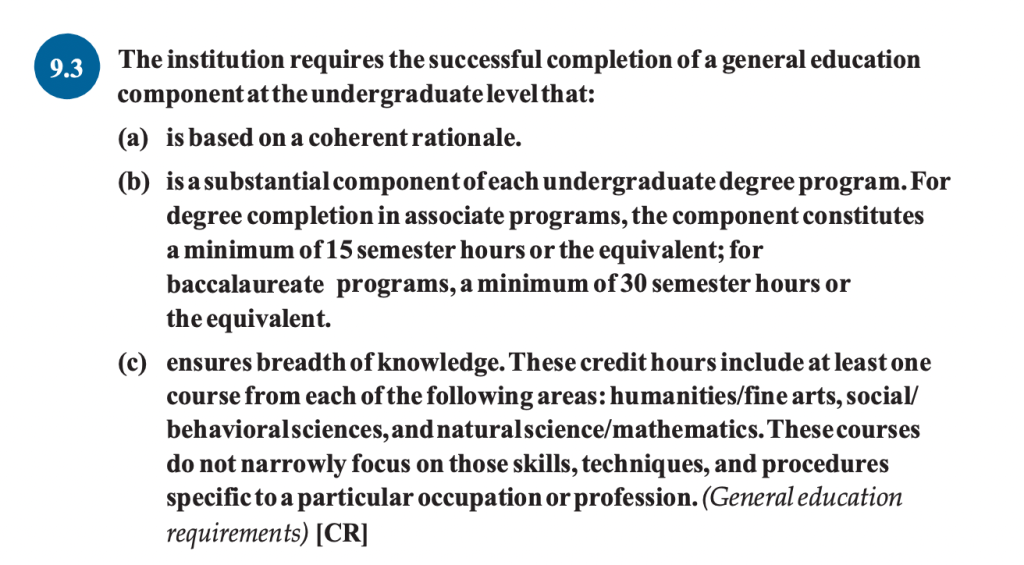
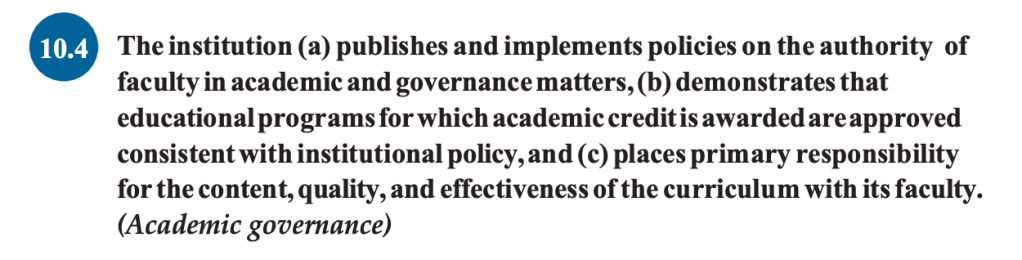
Section 10: Educational Policies, Procedures, and Practices
Section 11: Library and Learning/Information Resources


Let’s reform how we treat accreditation
Let’s start a reformation of the way MSU treats accreditation regulations!
Consider, for a moment, the sensible proposal Senate attached to a resolution to rid the institution of an unnecessary “requirement” to assess minors. The proposal, penned in 2020, has never been acted upon because the resolution itself was never formally recognized–the administration just informally accepted faculty were no longer going to “go through the motions” for an assessment practice that was pedagogically (and statistically) unsound.
We can and should do better.
We do not have to abide by unspoken agreements seemingly sanctioned by “higher powers.” The campus can collectively work toward better outcomes by communally interpreting the SACSCOC manual!
 Helga's Hub