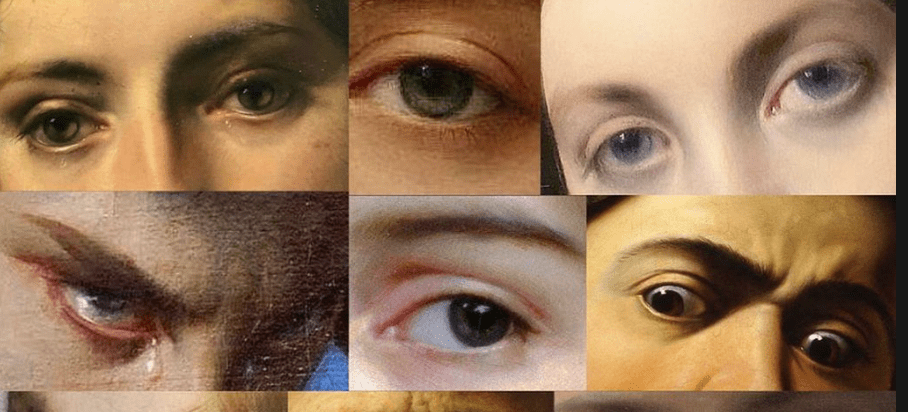
Ways of Seeing
When it comes to the study of literature and film, instructors have lots of options. They can look at the literature that was produced for film (such as Tennessee Williams’ screenplay for Baby Doll), literature was produced as a result of film (such as the graphic novelizations of Buffy, the Vampire Slayer), the influence of literature on film (particularly in regards to the pioneering work of D.W. Griffiths and Sergei Eisenstein and the cinematic fancies of Jean Cocteau), or the influence of film on literature (the “montage” in DosPassos’ USA or the “simultaneity” in Katherine Mansfield’s short fiction would be unthinkable outside of filmic precedents).
All of these options can be discussed under the rubric of “adaptation,” but most scholars of literature tend to reserve the term, and the content of literature and film course courses, for the transfer of pre-existing literary material to the silver screen. They may debate the “literary” nature of particular works (does the “literary” nature of YA novels like To Kill a Mockingbird compare with the “literariness” of works from the adult canon?), or discuss the parameters of what constitutes “film” (does a made for TV movie measure up to a theatrical release?), but they tend to focus on the ways in which filmmakers can (and cannot) translate literary techniques into cinematic form.
I will be no different. I will encourage you to recognize that literary adaptations are films in their own right, films that deserve to be celebrated (or derided) based on criteria that are not applicable to literature alone, but I will focus on literary debates and the particulars of a source text for a reason–I’m teaching an English class devoted to literature and film.

About Nick Hornby’s novel
Before we delve into our canonical works, I thought it might be helpful to look at an adaptation (of an admittedly non-canonical novel) that might help us think through some of the issues that we will be encountering with this semester, the filmed version of Nick Hornby’s About a Boy (2002).
The Weitz’s adaptation was able to cleverly register the dual perspective of Hornby’s novel and record its duet of a bildungsroman even though copyright issues kept the film from fully tackling particular themes in Hornby’s music-saturated narrative. This “successful” adaptation thus offers us a good glimpse of what we may (and, in some cases, may not) expect from a cinematic “translation.”
Before we can outline three “C”s that will help us understand the varieties of transfer and translation in this cinematic text, we need to watch the opening sequence:
Confluence: Hornby’s novel is somewhat unusual in the fact that it contains two homodiegetic narrators, Will and Marcus, who control alternating chapters. The Weitzs’ film mimics this narrative structure in the clever credits sequence, which uses voice-over narration and parallel editing to convey the the different perspectives of the central characters. While later scenes and sequences may eschew showy editing techniques (e.g., the wipes and dissolves seen above), the strategic use of voice-overs at key points in the narrative arc maintains a sense of localized perspective even when the camera is objectively recording what happens. Critics rightly note that fiction has a temporal freedom film lacks (and that film has a spatial reach written fiction cannot approximate), but another important distinction is narration itself. The camera is always the default narrator of film, even when there is an identified narrative presence, and this complicates any use of “first person” in film.
Censorship: Admittedly, it may be a bit of a stretch to call Courtney Love’s refusal to allow the filmmakers to use Kurt Cobain’s music censorship, but the filmmakers’ failure to secure copyright clearance for the music that figures so heavily in this 90s novel ends up having the same reshaping effect as the imposition of the Production Code. Just as countless filmmakers before them, the directors of About a Boy had to radically change portions of original story in order to avoid a public relations nightmare. Fans of Hornby rightly note that music is much more than just background noise in his novels–discussions of Cobain’s life and lyrics, for example, help to typify characters and define themes in About a Boy–but the artistic license that allows Hornby to build on Cobain’s music in prose does not afford a filmmaker the right to play those songs on the soundtrack to the novel’s filmic adaptation. In consequence, the Weitzs’ have to find other ways to cinematically define characters and express themes.
Casting: The stakes involved in casting may seem relatively low when you’re dealing with a work you don’t really know, or know and don’t care about, but they increase with audience engagement levels. Few of us may realize that there was a minor controversy when Hugh Grant was cast as Will (some commentators were questioning how a mainstay of the “chick flick” could successfully transition into an adaptation of “lad lit“), but we’ve all heard of some adaptation that either seemed like it would be or was torpedoed by casting choices. Twi-hards may have grown to love Robert Pattinson, but few Shakespeare fans were pleased to see Keanu Reeves in Much Ado About Nothing, even if it was directed by Kenneth Branagh. As the initial Grant controversy suggests, the issue is particularly pronounced when filmmakers are dealing with well-known actors with established public personae. In some cases, finished performances can win over skeptical critics (Tom Cruise was able to convince even Anne Rice that he could play the vampire Lestat); in others, roles can be successfully reworked to suit the big names stars (it’s highly unlikely that purported nicest guy in Hollywood, Tom Hanks, would have played Forrest Gump had the character remained the one in the novel). Casting can objectively fail (Demi Moore as Hester Prynne comes to mind), but we need to remember that many of casting controversies are subjective arguments.
And, if you need proof this surprisingly sweet movie actually works, here you go:
 Helga's Hub