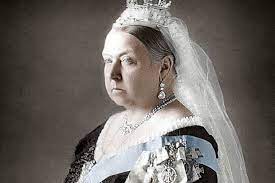
The Victorian period in English literature (1832-1900) is typified by the spirit of REFORM. Whereas the Romantics sought revolution via radical change, Victorians charted progress through ameliorative reform efforts.
Political reform: There was plenty of political unrest during the Victorian period, but many of the most pressing problems were diffused by “progressive” legislation: the Reform Bills of 1832, 1867, and 1884 extended the franchise to more and more British citizens; the Abolition of Slavery Act (1833) “freed” the slaves that had been traded in the colonies before slave trading was outlawed in 1807; the Repeal of the Corn Laws in 1846 suggested that the needs of the poor and the mercantile classes could outweigh those of the aristocracy; and the Married Women’s Property Acts (1870 and 1882) demonstrated that women were gaining equal rights under the law. (Admittedly, all of this reform was for citizens within the imperial metropolis. Some colonial laws became more draconian during the Victorian era, and the political and cultural insensitivity in Westminster actually exacerbated the great Irish and Indian famines.)
Territorial expansion: Britain lost its first colony just before the Romantic period, and it was in danger of falling prey to Napoleon in the early 1800s. After decisively defeating Napoleon in the Battle of Waterloo (1815), Britain began to rebuild its empire. Starting with a renewed focus on its crown jewel (India), Britain came to control one quarter of the globe by the time Victoria’s reign was at its end.
Industrial expansion: The country as a whole was starting to benefit from Britain’s status as the first Industrial nation. The increased standard of living did not, of course, eliminate poverty (which was extreme), but Britain became a shining example of what Industrial innovation could achieve. The Great Exhibition of 1851 demonstrated that Industrialization could create as much as it destroyed.
Technological progress: The discovery of a stable synthetic dye, perfection of the photographic process, and creation of the telegraph (the Victorian era’s Internet) were technological marvels, but the most significant Victorian innovations in technology were crafted in steel (a building material that could be cheaply produced, thanks to Bessemer). Brunel’s suspension bridges and tunnels helped to carve paths for the ever growing railways and his improvement on steamships made seafaring more efficient. Everywhere a Victorian looked, technological innovation seemed to make the world move at a greater rate.
Scientific discoveries: Lyell’s Principles of Geography technically came out at the tail end of the Romantic period, but its particular thesis of uniformitarianism had a profound effect on the Victorian mind, which now had to grapple with scientific evidence that the earth was far older than 6,000 years (a profound effect, by the way, that did not always lead to religious angst: Victorians took to fossil hunting as they learned of the discovery of dinosaurs, the Neanderthal man, and theories of the Ice Age). The laws of thermodynamics were formalized in 1847, electromagnetism became an object of study with the publication of Maxwell’s equations in 1864, and the bane of introductory chemistry students, the periodic table, was unveiled in 1869. Lister and Pasteur aided medical advanced (with antiseptic surgery and germ theory), and a lone Austro-Hungarian monk (Mendel) discovered laws of inheritance that wouldn’t be really circulated or understood until years later, but the most important scientific discovery, from a literary viewpoint, was Charles Darwin’s “discovery” of evolution. He wasn’t the first to discuss evolution, or the only to posit the theory of natural selection, but his 1859 publication rocked the Victorian world. It is one thing to state, as Lyell had, that the Bible’s chronology was off. It is quite another to show that nature creates itself. It is virtually impossible to overstate the importance of evolution, and evolutionary debates, in discussions of the Victorian period.
Ongoing debates in the Victorian era (Debates are more applicable to Victorian literature than thematic topics because much Victorian literature openly engaged in social concerns and issues):
- The Woman Question
- The “progress” brought by Industrialization
- The “progress” of history (technological progress did not necessarily signal human progress—many Victorians feared that they were living in an age devoid of heroism)
- The Two Nations thesis (related to questions of Industrialization, but more concerned with what to do with the poor—deals with everything from work houses to child labor laws)
- The purpose and sustainability of the empire (what was the “white man’s burden”? should England seek to maintain its size or expand?)
- Evolution (a debate that England got out of its system in the Victorian era and Americans have dragged into the 21st century)
- The classification of human sexuality (the Victorians weren’t as prudish as we’ve made them out to be; they researched and classified many forms of sexuality, and we continue to use designations created by our 19th-century predecessors)
Major aesthetic innovation: Realism. This was the golden age of the novel. The narrative precision of realistic prose was strongly influenced by innovations in photography (as many writers strove to demonstrate what a picture in words could convey that a photograph could not) and empirical science (as many great realists strove for a level of verisimilitude that could literally be verified by the reader).
Thematic interests that carry over from the Romantic period:
- Medieval revival (Gothic excesses were replaced by heroic retellings of the exploits of King Arthur, but there was still a keen interest in the medieval romance)
- Individualism (Victorians didn’t place the rights of the individual over and above everything else, but they did focus on the importance of individuation; realism was [and is] nothing if not a study of the individual in its particularity; this individualism, though, was always an individualism in context—in the context of society)
 Helga's Hub