Admittedly, I’ve never taught a course on the Gothic in and of itself, but I do find ways to incorporate it when I can. The Gothic always makes a brief appearance in the British literature survey, and it even pops up from time to time in studies of literature and film. Considerations of the “queer gothic” now undergird the current configuration of ENG 398, but was only after four previous versions failed. Gothic designations have only ever served as the true foundation of one class–a graduate seminar on contemporary literature that just so happened to have the course number 666.
Don’t expect much outside of “The Gothic in Literature” slide deck to be truly comprehensive. These targeted materials were designed to fit into classes with already defined topics, literary periods, and critical concerns.
Sway Presentations




PowerPoints on the Gothic

Web Resources
Jeanette A. Laredo’s A Guide to the Gothic offers some great material, including excerpts from canonical texts. Marquette’s “Glossary of the Gothic” provides succinct explanations, albeit not in the most readable format. The British Library’s collection of essays on the Gothic are written by top scholars in the field. The video below, narrated by Professor John Bowen, is part of this series.
And last, but not least
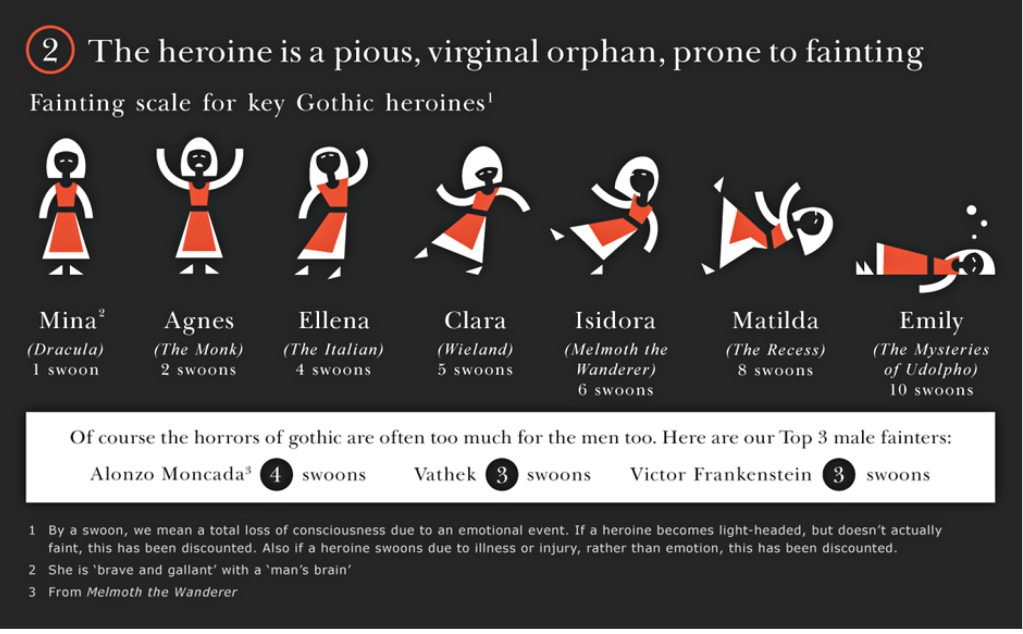
I highly recommend The Guardian‘s “How to tell you’re reading a gothic novel, in pictures.” #2 (pictured) illustrates why Jane Austen only ever produced a clever parody of the Gothic. A true Austen heroine may “run mad as often as [she] choose[s],” but she should never, ever faint.
 Helga's Hub