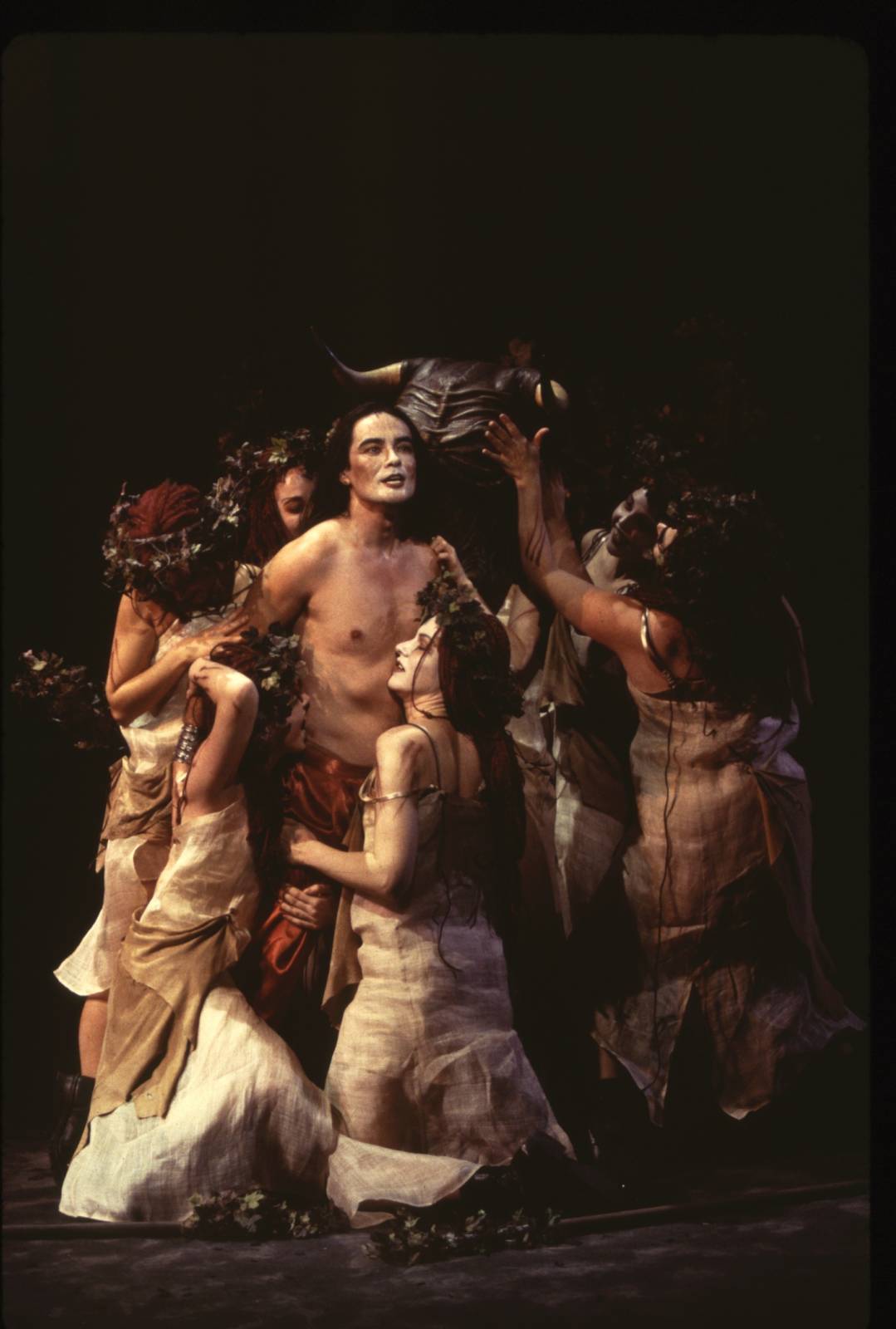
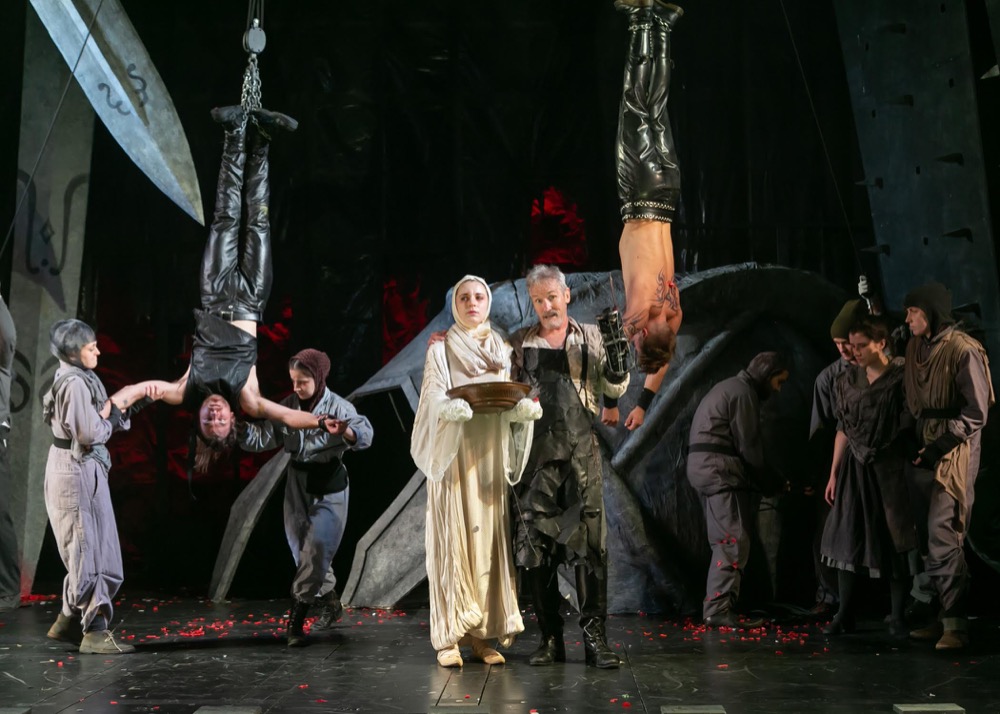
Every student in 499c will be assigned to a group that will complete a study guide on either Euripides’ Bacchae or Shakespeare’s Titus Andronicus.
Each group will be comprised of 2-3 students who will be expected to work collaboratively to complete a unified project that demonstrates scholarly acumen and curricular coherence. Each finished project (i.e, each complete study guide) should be uploaded to the BlackBoard site by the group designee on or before the stated due date.
Finished projects will be reviewed in class, and group members should be prepared to speak to (and in favor of) their curricular material. Final scores (i.e., the points the project earns out of the 150 possible) will be awarded to all group members, so it is in your best interest to ensure that everyone pulls his/her full weight!
Groups should feel free to format their projects as they see fit, and to use whatever software, program, or platform that allows them to create a comprehensive “document” that can be easily accessed and read by everyone in the class. (Word documents, pdf files, Sway presentations, PowerPoints, Adobe spark illustrations, and even webpages and Sharepoints are all appropriate for this assignment. The group just needs to ensure that the comprehensive “document”–in whatever form it takes–can be accessed be everyone and uploaded to our BlackBoard site under the appropriate assignment link.)
What to include in a Study Guide
Offered in no particular order–your group will determine what information goes where:
A *precise* identification of the text being studied: Each one of these works has a publication history: there are multiple English-language translations of Euripides’ play and multiple variants of Titus Andronicus. Furthermore, each work has its own web presence. Obviously, your “choice” of text is the version assigned in this class, but you can’t present a fully functional study guide without any reference to other versions. This means that every group will be expected to complete the scholarly research to identify other textual editions teachers might use. (Groups focusing on The Bacchae should start by determining which principle is more important–(a) retaining structure or form or (b) modernizing language in order to make the ancient work more acceptable–and acknowledge the principle choice in their guide.)
A *brief* outline of the biography of the author: Brief author bios (none should really be much over a paragraph) should focus on the literary significance of the author (i.e., what in his life either signals his literary importance or “explains” the work about to be explored).
Historical background: Every work will need to be placed in its historical context. The amount of context may depend on the work being considered (some, for example, may believe an ancient Greek play requires “more” explanation than a Renaissance drama) and the group’s critical approach (certain exercises or critical insights might require historical context to make sense). Here do not think of prescribed length; focus on justification. What information are you including and why? Every historical fact and cultural context must serve a defined purpose, allowing you to be able to say something *specific* about the literary work being analyzed/discussed. The most meticulous overview of Renaissance drama, for example, will end up being “filler” if you just list discrete facts instead of demonstrate to your audience how you are curating information to achieve a curricular end.
A *brief* overview of the text: Just as with the author bio, this should be no more than a paragraph, and groups really should do their best to eschew plot summary. The purpose of this study guide is not to give students a “short cut” through the text (so they don’t have to read it) but help navigating its complexity. So how to do that? Complement a one or two sentence summary of the plot with an outline of the form of the dramatic work and an articulation of some major themes (listed as actual themes, not just the topics that are treated in the text).
Formal analysis: You’re studying this artifact as a work of literature, so you are obliged to discuss its literary qualities. Genre will be key here, and you’ll want the specificity and nuance that comes with the advanced study of literature (these are both particular *types* of plays, so be very clear and precise). Also make a point of identifying the work’s style (so what makes The Bacchae typical of Euripides’ drama, and how is Titus Andronicus similar to Shakespeare’s other tragedies?).
Relevant literary terminology: This area will necessarily overlap with your formal analysis section (and can be combined with it), but make sure you identify and define the discipline-specific terms that allow scholars to speak knowledgeably about the text.
A list of the best “introductory” resources, both web and print, for your text: You should present this list in a bibliography that complies with the latest iteration of the MLA style guide. Here you want to include the standard library works that any literature scholar would consult in order to begin a basic analysis of the text and select a number of what you consider the best websites. Feel free to preface your list with an articulation of the criteria used to make your selection.
Class exercises: Include two distinct lessons that a high school teacher could use to address (1) form and (2) thematic content. Each lesson must:
- be able to be performed within a class hour
- be appropriate for a high school classroom (so no swearing or nudity!)
- incorporate a close reading of a passage of the text
- outline student objectives and outcomes (for the non-English ed folks: make sure you specify the purpose of the exercise and what you hope students will learn by completing it)
It is perfectly fine if your exercises include a consideration of both form and content. What matters here is that form (in terms of genre and literary construction) is obviously addressed in one exercise and an important theme (one of the ones you list in your text overview) is foregrounded in another.

Final Point: Study Guides are research projects. Students can and should feel free to use the excellent educational information available online from top schools and museums, but they should also be accessing our library databases and uncovering information available through focused research.
 Helga's Hub